Intermodal Freight Management System for Sydney’s Port Botany

Delivered 2019

Project Information

Client:

Transport for NSW

Location:

Port Botany, Sydney NSW

Completed:

2019

Project Overview

Port Botany is the largest container port in New South Wales and Australia’s largest bulk liquids facility. It is a vital asset for the state and national economy. Operating 24/7, around 1,600 ships carry over 2.8 million containers through each year, which are serviced by road and rail infrastructure.     

Congestion posed a significant threat to Port Botany’s operations. Landside delays could result in vehicles missing scheduled loading windows and incurring financial penalties. If transportation to and from the port became increasingly unreliable and expensive, containers risked being diverted to other major cities.  

NSW Ports engaged 4Tel to customise its 4Port software to address Port Botany’s goals: 

  • Maximise the efficient movement of trade through the port 
  • Encourage increased 24/7 operations 
  • Provide a consistent service level and greater transparency for the supply chain 
  • Ease landside congestion  
  • Execute, assign and implement regulations and relevant penalties 
  • Optimise productive usage of existing infrastructure 

Scope of Work

4Tel designed, developed and commissioned a Cargo Efficiency Operational System that combines multiple complex data points into a single comprehensive solution. It offers real-time tracking and analysis of movements, streamlined access to terminal data, and strengthened compliance with slot booking and turnaround time standards.  

4Port functionality includes:  

  • Truck marshalling management: staging of up to 50 trucks/hour to reduce congestion. Terminal queue times and truck turnaround times are displayed for each stevedore. 
  • Container turnaround: tracks average processing times at terminals. 
  • Telematics Analytics Platform: monitors truck routes.  
  • Rail performance: measures rail lift rates and monitors road vs rail modal share. 
  • Bottleneck detection: highlights areas of congestion using live and historical performance data. 
  • Operational dashboard: KPIs such as throughput and servicing times are updated monthly.

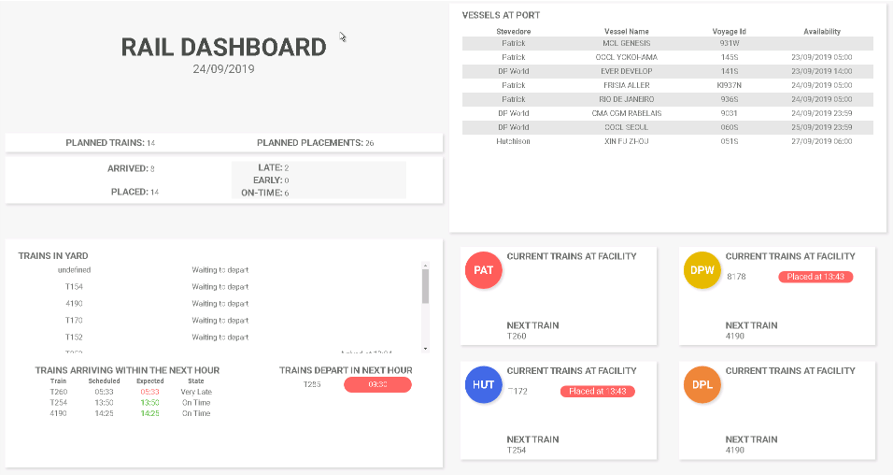
Separate interfaces for road and rail operations are integrated on a dashboard for staff to quickly and easily source information and direct actions.  

  • Road: Truck locations are collected from an automatic number plate recognition system, which has various read points throughout the terminal. The system unites the data into a single trip, which is used for compliance and to issue penalties.
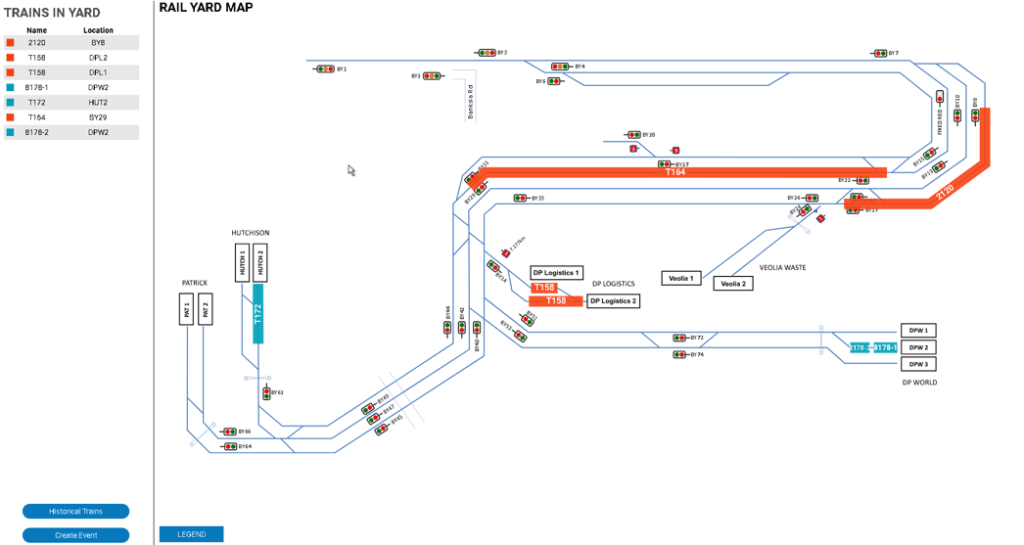
  • Rail: A Plan Reconciliation screen compiles data on daily rail plans from stevedores and rail operators. The Rail Yard Map provides a real-time view of the rail yard and records a detailed, time-stamped, history of train movements for reporting. 

Accountability measures are built into the software to manage the variety of internal and external stakeholders accessing the system. These include different levels of user permissions, monitoring of actions, communication records, and an audit trail. Performance measurement tools and report generation assists in the analysis of port operations.   

4Port operates within a standard web-browser, which is designed to integrate with existing hardware to mitigate the need for expensive infrastructure upgrades.   

Outcomes & Achievements

Implementing 4Port at Port Botany has contributed to more efficient, reliable, and sustainable freight logistics at one of Australia’s busiest container ports.   

Outcomes include:  
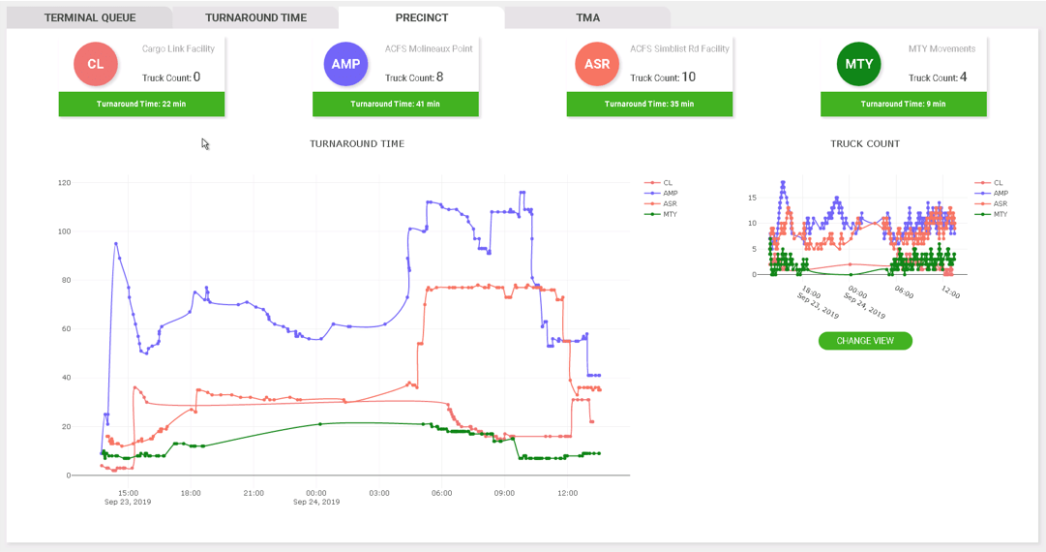
  • Faster truck servicing – average turnaround times consistently maintained at around 15–20 minutes (reduced from 25–30). 
  • Enhanced marshalling and gate management – reduced congestion and improved entry sequencing. 
  • Stronger regulatory compliance – through automated breach reporting and performance tracking. 
  • Improved transparency and accountability – real-time dashboards are accessible to stevedores, carriers, and regulators. 
  • Data-driven decision makingincreased data accuracy and availability to support planning.